
GTM Engineering: How Top Teams Are Treating Go-To-Market Like a Product


GTM Engineering: How Top Teams Are Treating Go-To-Market Like a Product
What if your go-to-market motion didn’t rely on guesswork, one-off campaigns, or scattered tools — but instead ran like a product?
This was the central idea in our latest XgridTalks session featuring Everett Berry, Head of GTM Engineering at Clay. And if his insights are a preview of where revenue teams are heading in 2025, one thing is clear:
The future of growth is engineered — not executed.
Everett’s perspective reframes how CMOs, RevOps leaders, Marketing Ops teams, and founders should think about building revenue. GTM Engineering isn’t a trend. It’s becoming the operating system behind the fastest-growing companies in the world.
The Secret to Scalable Revenue? GTM Engineering
GTM Engineering is exactly what it sounds like:
“Treating go-to-market like a product — designed, built, released, measured, and constantly improved.”
— Everett Berry, Clay
Where traditional teams run campaigns, GTM-mature teams build systems:
- Systems that get smarter every week
- Systems that self-optimize using AI and signals
- Systems that deliver predictable pipeline without human bottlenecks
Everett calls GTM engineers “the most technically advanced go-to-market people in the market right now.”
They blend APIs, automation logic, CRM architecture, enrichment, and AI models into a single unified GTM engine.
This is where Ops meets AI — and it’s rapidly becoming the cornerstone of modern revenue organizations.
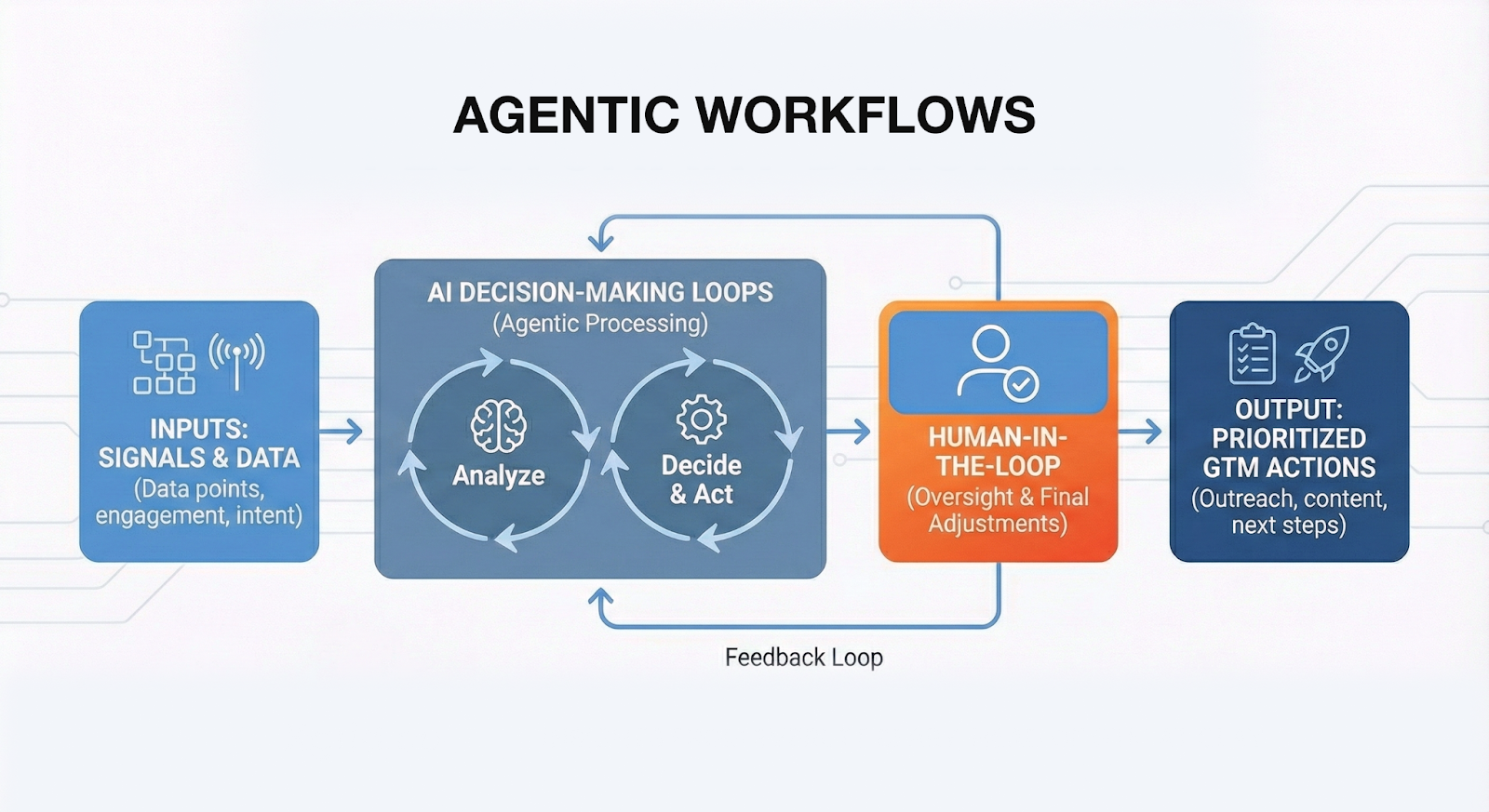
The Modern GTM Stack: 4 Core Layers of an Engineered Growth System
Everett breaks the GTM Engineering stack into four essential components — and stresses that if even one layer breaks, the rest of the system becomes unreliable.
Below is the deeper, more strategic view of each layer:
1. System of Record — Your GTM Brain
(HubSpot, Salesforce, Snowflake)
This is the foundation: your customer and account source of truth.
It defines:
- ICP qualification
- Account ownership
- Deal stages & lifecycle
- Revenue history
- Attribution
- Buying committee structure
Everett’s golden rule:
“You can’t automate what you can’t trust.”
If your CRM is messy:
- enrichment falls apart
- scoring becomes meaningless
- signals misfire
- outbound goes to the wrong people
- analytics show lies
Most GTM failures begin at the data layer — not the strategy layer.
2. The Enrichment Layer — Turning Raw Data Into Intelligence
(Clay, Clearbit, ZoomInfo, third-party providers)
Enrichment is the quality engine of GTM. It updates and cleans your data continuously, not once per quarter.
This layer handles:
- Valid email & phone waterfalling
- Job changers
- Role verification
- Sub-industry segmentation
- Tech stack identification
- Employee counts
- Accurate locations
- Social URLs
- Buying committee mapping
Everett calls this layer:
“The layer that transforms basic CRM entries into GTM intelligence.”
If this layer is weak, personalization is weak — and automation breaks.
3. The Action Layer — Where GTM Actually Executes
(Outreach, Apollo, LinkedIn, dialers, Clay actions, multi-channel outreach)
This layer is responsible for the actual doing:
- outbound sequences
- LinkedIn touches
- calls
- nurtures
- alerts
- routing
- content delivery
- ABM workflows
Everett is blunt here:
“The action layer shouldn’t think — it should execute.
All the thinking happens above it.”
Signals + enrichment → tell the action layer exactly what to do, when, and with whom.
This is where AI-generated copy, adaptive messaging, and multi-channel sequencing begin to shine.
4. Analytics Layer — The GTM Debugger
(Gong, Looker, dashboards, reporting tools, Clay analytics)
This is the feedback loop that makes every sprint smarter:
It reveals:
- which signals actually drive pipeline
- which channels convert
- which messaging resonates
- which campaigns die
- where reps break process
- where accounts stall
Everett calls this layer:
“The debugger of GTM systems.”
This is what turns GTM from campaign-driven → system-driven.
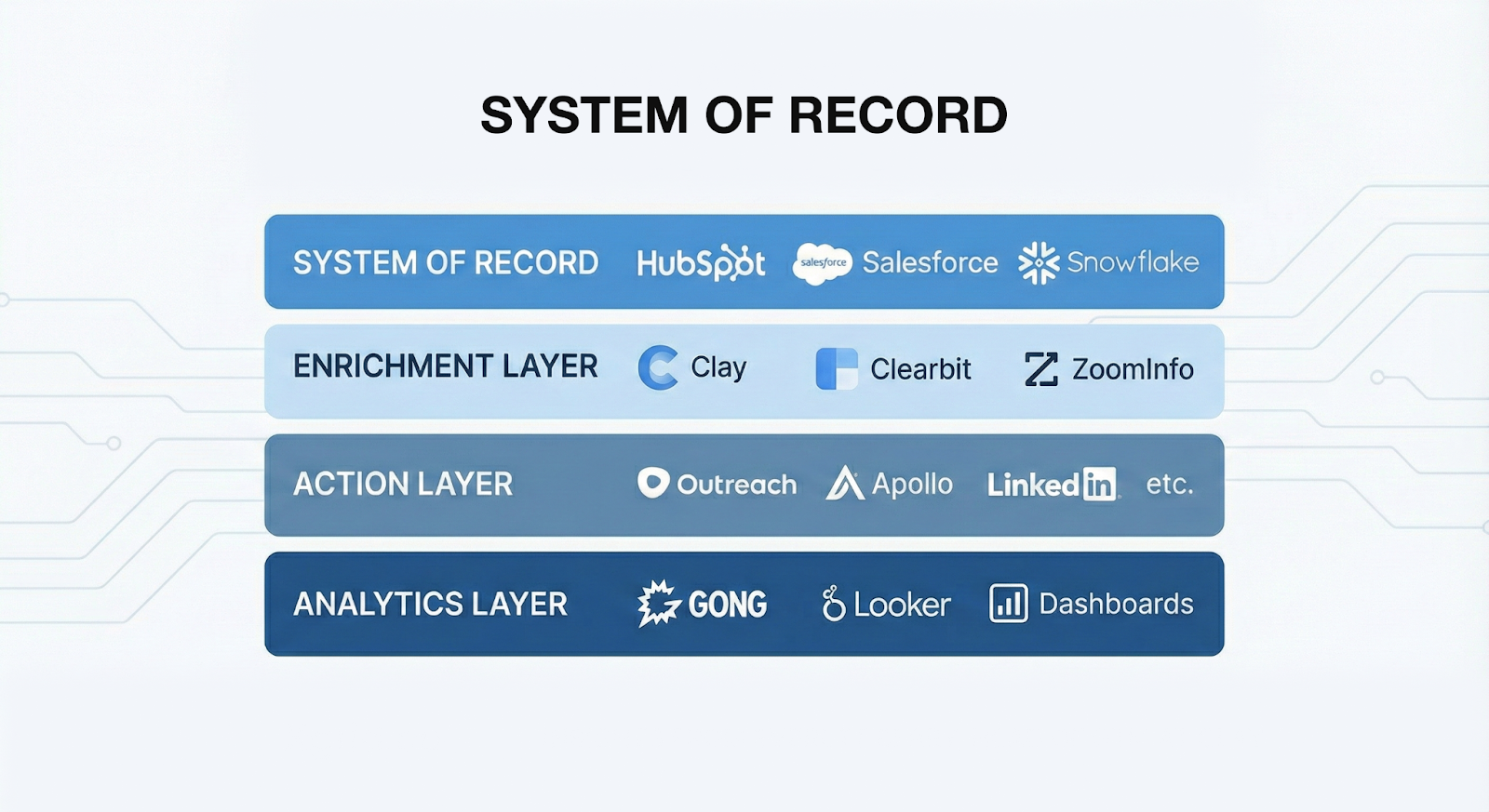
Don’t Respond Faster — Respond Smarter: The New Role of Signals
One of the biggest misunderstandings in GTM today?
Treating signals like triggers.
Many teams still believe:
“Signal fires → send outreach immediately.”
Everett warns against this:
“Signals tell you who’s warming up — not who to bombard.”
Top teams instead use signals to calculate heat, not initiate spam.
A modern GTM signals model includes 8–12 data points:
- ad interactions
- LinkedIn engagement
- website visits
- event attendance
- outbound replies
- founder interactions
- ICP persona match
- buying committee movement
As heat rises → the account moves into deeper levels of personalization.
Signals become strategy, not noise.
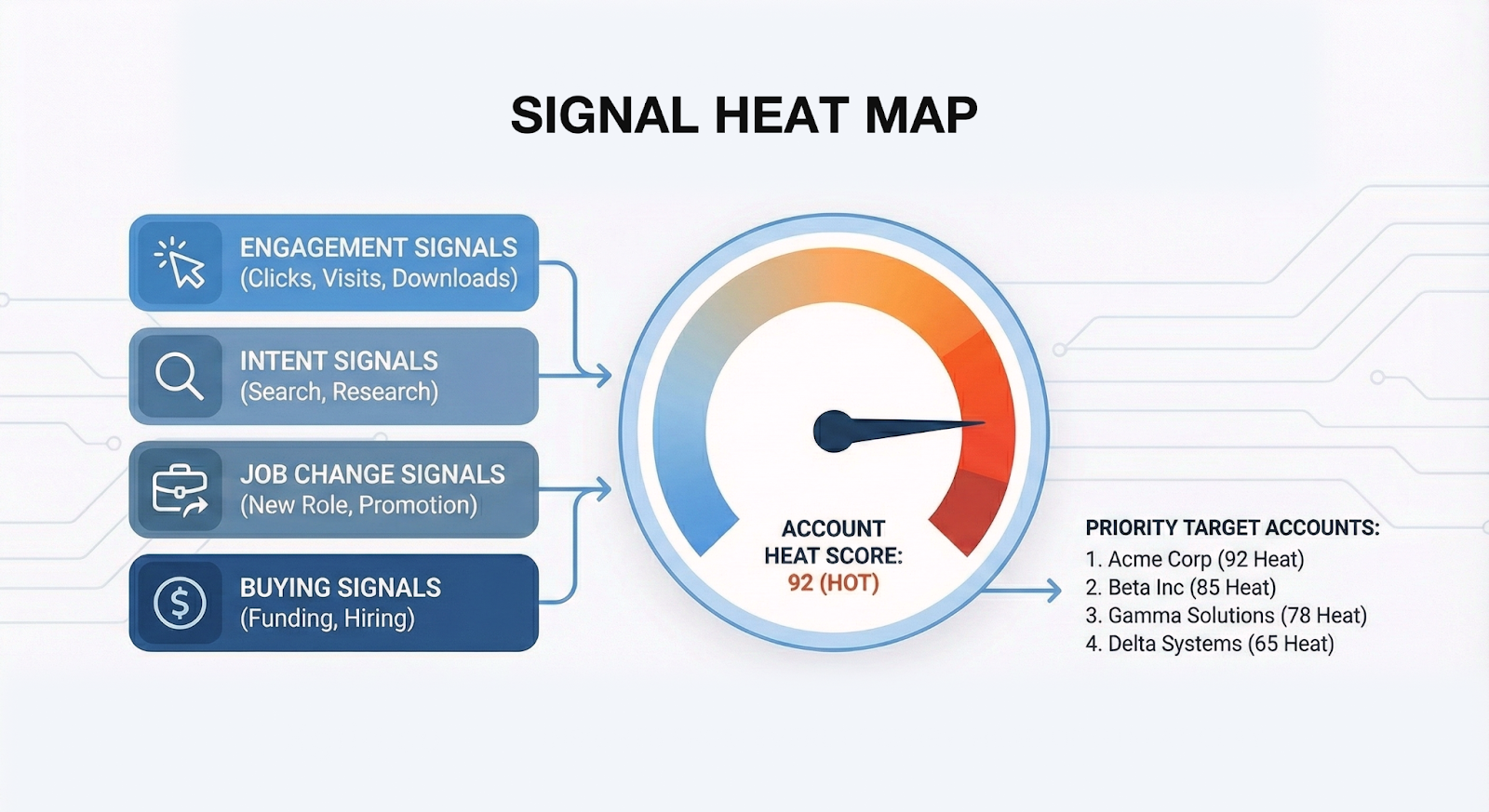
From Ops to “Agentic Workflows” — GTM’s Next Evolution
Most people imagine autonomous AI SDRs taking over outreach.
Everett gives a more grounded view:
We’re not at “full agents” yet.
We’re at agentic workflows — and they are incredibly effective.
He defines them as:
“Workflows that can make small decisions for you — without losing control.”
Here’s what agentic workflows look like in real GTM systems:
1. Continuous Qualification
Accounts are re-scored continuously based on:
- enrichment updates
- job changes
- website activity
- persona behavior
- buying signals
Not quarterly.
Not monthly.
Continuous.
2. Adaptive Messaging
Sequences adjust as new data arrives:
- new hires
- new AI product launches
- new pages added
- new funding
- new tech stack signals
Outbound evolves as the account evolves.
3. Signal-Driven Channel Selection
Not “email-first.”
Instead:
- LinkedIn for social personas
- WhatsApp/iMessage for high-trust contacts
- calls for C-levels
- email only when warm
The system chooses the channel — not the rep.
4. Human-in-the-Loop Oversight
Agentic workflows don’t replace people.
They replace low-level work so humans can focus on:
- strategy
- creative outbound
- play design
- high-value interactions
Everett is clear:
“AI amplifies good GTM — it doesn’t replace it.”
Run GTM Like Product Sprints
Everett’s biggest recommendation for modern teams:
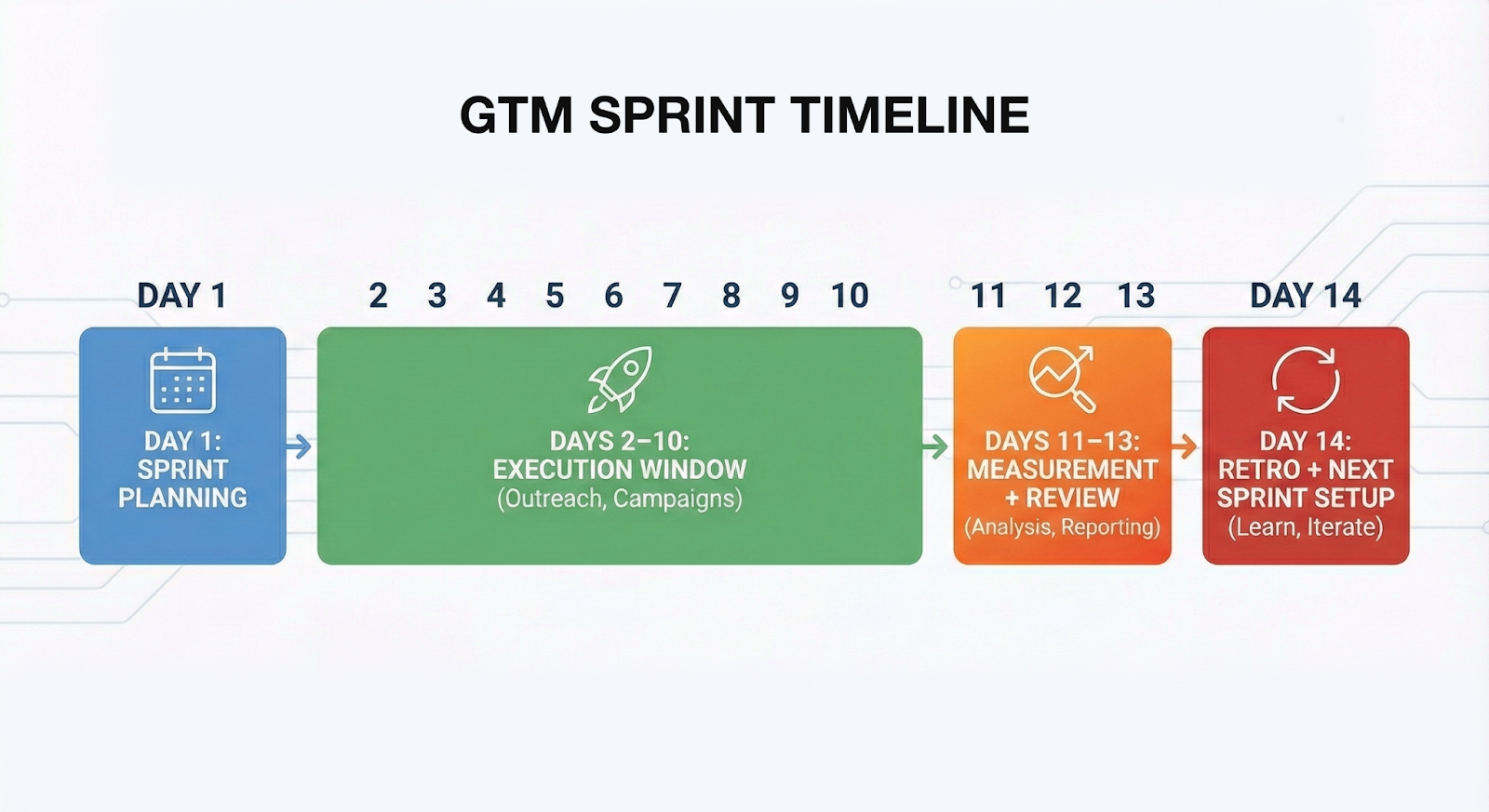
“Run your GTM in two-week sprints — just like your product team.”
This turns GTM from random experiments to disciplined iteration.
Here’s what a real GTM sprint looks like:
1. Sprint Planning (Day 1)
Define:
- segments
- signals to refine
- message variants
- channels to prioritize
- hypotheses
- success metrics
This removes guessing entirely.
2. Execution Window (Days 2–10)
Accounts flow through the GTM engine:
- signals update heat
- workflows route accounts
- messaging adapts
- SDRs + automation run in parallel
- enrichment sharpens personalization
This is where the system learns.
3. Measurement & Review (Days 11–13)
Teams examine:
- which signals correlated with movement
- which channels spiked
- which segments activated
- what died
- where bottlenecks appeared
This prevents stagnation.
4. Sprint Retro (Day 14)
Teams adjust:
- scale winning messaging
- adjust signal weighting
- retire failing plays
- plan the next sprint
This rhythm compounds the pipeline every two weeks.
Why This Matters for CMOs & RevOps Leaders
Choosing another tool won’t help you scale.
Choosing a new operating model will.
Here’s Everett’s playbook for 2025:
✓ Start with data quality
Everything else breaks without it.
✓ Automate what already works
Don’t automate noise — automate proven processes.
✓ Treat signals as strategy, not triggers
Composite heat scoring is the new ICP.
✓ Adopt sprint-style GTM iteration
Your GTM should improve every two weeks.
✓ Engineer your GTM like a product
Not a calendar. Not a sequence. A system.
The teams that win in 2025 will be the teams that build their GTM — not the ones that run it manually.
The Future Belongs to GTM Engineers
GTM Engineering is not a niche skill anymore.
It’s the backbone of scalable, AI-powered growth.
Everett’s final message is the clearest signal of all:
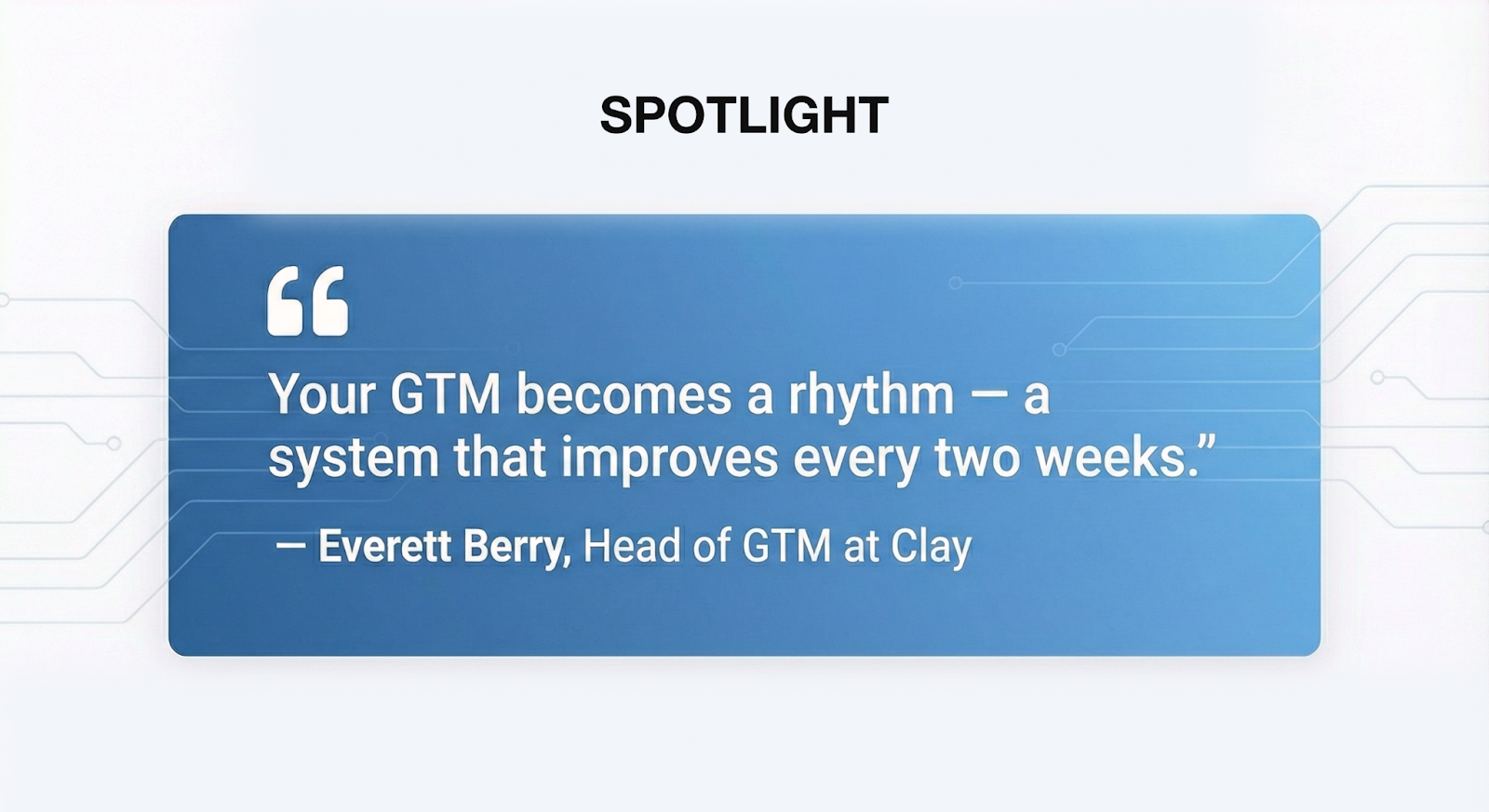
The companies who adopt this mindset will build revenue machines.
The ones who don’t will keep running campaigns — and wondering why growth is slowing.
Watch the Full XgridTalks Episode
GTM Engineering Masterclass | Signals, Automation & AI with Head of GTM Engineering at Clay
Related Articles


Related Articles

Established in 2012, Xgrid has a history of delivering a wide range of intelligent and secure cloud infrastructure, user interface and user experience solutions. Our strength lies in our team and its ability to deliver end-to-end solutions using cutting edge technologies.
NAVIGATE
Cloud & DevOps Web & Mobile Apps Temporal Digital Marketing GTM Engineering Marketo Consulting HubSpot Consulting Company Careers ResourcesOFFICE ADDRESS
US Address:
Plug and Play Tech Center, 440 N Wolfe Rd, Sunnyvale, CA 94085
Dubai Address:
Dubai Silicon Oasis, DDP, Building A1, Dubai, United Arab Emirates
Pakistan Address:
Xgrid Solutions (Private) Limited, Bldg 96, GCC-11, Civic Center, Gulberg Greens, Islamabad
Xgrid Solutions (Pvt) Ltd, Daftarkhwan (One), Building #254/1, Sector G, Phase 5, DHA, Lahore
Xgrid © 2026. All rights reserved.